
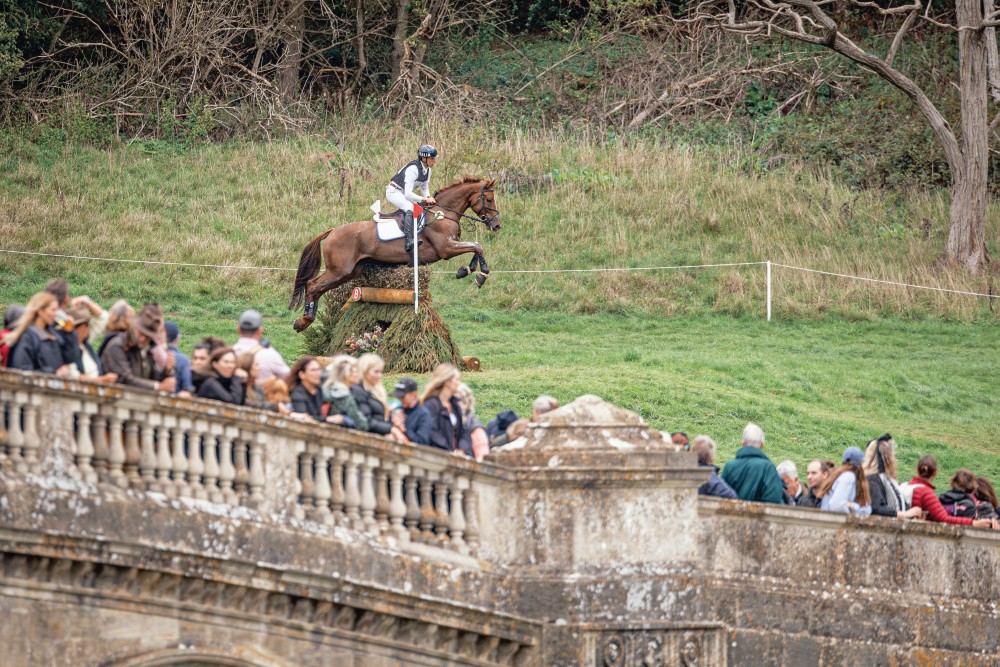
Paolo Torlonia and Zinny
The growth of the ‘Made in Italy’
Susanna Cottica/ Verdiana Diaris
Paolo Torlonia was born on the 14th of February 1997, in Rome (Italy) and moved to England in 2016.
An international event rider, his career has continued to grow, from achieving brilliant results in pony, junior, and young rider competitions to becoming a key figure in the Italian eventing team. Despite his young age, he has already taken part to two European Championships: in 2021 in Avenches with Bambino de L’Ilatte and in 2025 in Blenheim, where he made his senior team debut with his trusted nine-year-old Italian and home bread mare, Zinny. This chestnut mare is only nine years old and was bread by Paolo’s family run stud, and was trained by him since the early stages of her career.
Let’s talk about you: when, how, why, and where did you start…?
Although I was born into a family with a big equestrian tradition, as a child I wasn’t particularly passionate about riding. I preferred video games, and the idea of riding ponies didn’t appeal to me; I probably was even a little afraid. Around the age of ten, I began to explore horse riding, thanks primarily to my aunt Argenta Campello and Evelina and Sara Bertoli. I began competing on ponies, progressing steadily until I took part to two European Championships, always under the guidance of Argenta.
When I moved on to horses, I began training with Federico Roman, with whom I remained for five years. This was a very important experience for my development. I learned a lot from Federico, I grew as an athlete and as a person. It was an excellent preparation before moving to England. When I was in Rome, I was lucky enough to have very positive influences around me, I was riding alongside Pietro Roman, who fostered a strong passion in me, a passion already rooted in my parents, Cintia Campello and Leopoldo Torlonia.
England has always been a bit of a dream of mine. I shouldn’t say this, but in high school, during lessons, I used to watch videos of eventing in England. I was fascinated by the level of the horses, the riders, and the competitions. So at 19, I moved there and went to university in Cirecenster. After university, I decided to pursue sports professionally and went to Tom McEwen for four years, a period that was like getting a real degree for me. Those were very formative years, not only technically but also in terms of managing horses, the stables, the relationship with owners, and how to build a career in our sport. It was the COVID era, and I was somewhat fortunate because Tom was always home. I rode two of my own horses and some of his. He taught me the profession, he passed on to me the culture of great riders, a culture different from the one we have in Italy, not necessarily better or worse, but much broader and with different and wider horizons.
What are the qualities an event rider must have?
A big heart and passion for the sport, but also tenacity, resilience, a strong desire to work without fear of making mistakes. We can have the best coaches, but then the responsibility lies with each of us; we are responsible for our own doing. We must be able to make our own choices; some are good, others less so. We learn from our mistakes. There are so many qualities we must have, but every rider is different. This too is a lesson I had to learn. We shouldn’t have idols,
we should gain self-awareness.
Tell us about the European Championships at Blenheim
It was a wonderful experience. From day one, there was a super-nice atmosphere, a strong energy in supporting each other. It was really nice; the team spirit always encourages us to do better. There are many Italians in England; Vittoria Panizzon, Giovanni Ugolotti, and we see each other often, supporting each other. I’ve competed in many national and international competions with Pietro Maiolino, and we’ve been close for a long time.
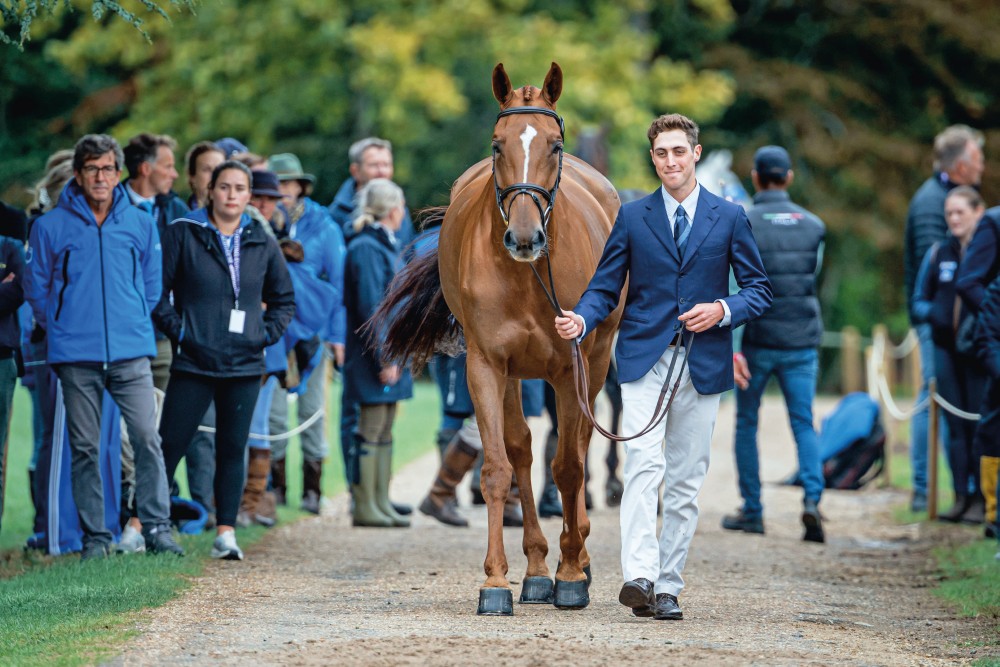
Rocca di Papa, Pratoni del Vivaro – 18 September 2022
Ph. Stefano Secchi/imageSS
Are you happy with your result? Your cross-country performance with Zinny was flawless
Zinny was born and raised at home, on the farm at Castel Lombardo. The first time I took her jumping cross-country, she was only four years old and she felt like she’s been cross-country many times before. She was natural, light, confident, and easy to ride; she was so impressive. She then grew up with me. For this Championship, I mainly focused on getting to the competition week with Zinny at her best;
I wasn’t thinking about the final result. The mare proved to be super mature; she performed a good dressage test without any serious errors despite her nine years of age. The cross-country test was very intense, a beautiful round, which was to be expected at a European Championship in England. There was a lot to do in the middle part of the course, lots of efforts one after the other without a rest jump, then it become slightly easier in the final part. Everyone had to be good at understanding their horse’s performance after eight minutes of such an intense round. I’ve always had so much confidence in my mare so I was quite calm, but she had never faced a Championship like this. She was fantastic, relaxed and never tense. The team strategy was to take two alternatives, which earned me time penalties, but she did the most intense part very well and then finished in top form.
Zinny came to me in England at the age of four. I trained her from the very beginning of her career, and she and I know each other very well. Eventing is, after all, a test of trust between horse and rider. The confidence you feel while at an important competition with a horse you’ve known from the start, who has grown with you, is the essence of our discipline. In eventing, more than in any other discipline, the centre of everything is an evolving partnership.
Zinny is an Italian mare; This is an excellent achievement for our breading and this was an excellent debut for a young combination.
At our home stud, we try to produce interesting horses that we then bring to England; some stay, some we sell to keep the business going. It all started thanks to Pucci Rossi di Medelana, a great friend of my parents, who allowed us to take over the Allevamento del Terriccio, which he owned. My father used to ride Zinny’s dam, Ficosa del Terriccio in competitions, and I rode her too. Breeding is an interesting journey. Sometimes excellent horses are born, but let’s say it’s a bit of a lottery. The more I learn, the more I realise that it’s very difficult to predict when a horse is three or four years old if he will compete at a certain level, especially in eventing, where partnerships mainly create the opportunity for growth and success.
Today, Italian breeding is well-established and has gained increasing popularity abroad.
Italian horses are competing at international level in eventing.
How do you see eventing as it is structured today?
I’m still young and still have a lot to learn. My opinion is that, given the direction our discipline has taken, the type of horse to take to a Championship or the Olympics is different from the type of horse for a 5* event.
In a Championship or the Olympics, the goal is to have the best of the sport, while trying to get everyone to compete. We try to make the first and third tests more difficult, since dressage is very complex and show jumping is on two rounds instead of one. We also simplify the cross-country test to make it safer for everyone.
Truly, the holy grail of eventing, however, remains the 5*, like Badminton and Burghley, a tradition that must be preserved. Years ago, in cross-country, the horse had to be brave and quick, and if he touched a corner or the first part of a coffin, nothing would happen…
Nowadays, in cross-country, safety is the top priority, and rightly so, to protect horses and riders. But at the same time, after eight minutes of cross-country, the horses are required to be as alert as if they were tackling a double in a show jumping competition…
Fitness of horses and riders. Do you think it’s equally important?
Yes, of course, I think so. Today, the sport is becoming increasingly competitive, and the physical condition and weight of the rider also matters a lot. Just as there’s a difference between doing a long cross-country and a short one.
I train in the gym for mental preparation even more than physical. Today, many riders feel the need for thorough training.
What are your plans?
I’m very fortunate to have a stable with some very interesting horses. I have an eight-year-old named Aerobico del Terriccio, who I think is very special, and some four- and five-year-olds who are growing well. I’d love to compete in the Olympics and be able to give my best.
I’d like also to participate at Badminton and Burghley, which are the goals we work towards every day. A big dream for me, however, is also to make my business work well, to make everything sustainable without having to sell horses to make it work, especially the ones I’d like to keep. I still consider myself very fortunate to do what I do every day.
I’m happy in England, I have a good support team, a great team of trainers, a great group of friends with whom I share so much. I’m very happy and grateful to be able to do what I love every day. For me, this is a very important value, and I really care about always keeping it in mind. In this sport, you go up and down constantly, moments when everything goes well and others when everything goes wrong, but in the end, it’s the passion that counts, it’s the daily grind of raising young horses, of always improving.
This is special to me… Then we will see!
Photo Credits Stefano Secchi